Connecting Virtual Tables: Regulatory Compacts Reshaping Online Card Gaming Across American States
Vera Flores · Jun 22, 2026

Connecting Virtual Tables: Regulatory Compacts Reshaping Online Card Gaming Across American States
Regulatory frameworks have begun linking virtual card tables across state lines in the United States through a series of interstate compacts that allow shared player pools for online poker and similar games, and these agreements continue to expand access while maintaining state-level oversight. Data from industry reports shows participation in multi-state online card rooms has grown steadily since the first such pacts took effect in 2019, with additional jurisdictions joining negotiations throughout 2025 and into 2026.
States including New Jersey, Pennsylvania, Michigan, and West Virginia established the initial Multi-State Internet Gaming Agreement that permits operators to pool players from participating jurisdictions for poker games, and this model has since influenced discussions in other regions. Figures released by state gaming divisions indicate combined gross gaming revenue from these linked platforms exceeded $150 million in the most recent full year tracked, demonstrating how these bridges create larger player bases without requiring full federal legislation.
Core Mechanisms Behind Interstate Links
Each participating state retains authority over licensing, taxation, and consumer protections within its borders, yet operators receive approval to merge traffic for poker tables through secure technical integrations that verify player location via geo-fencing. Researchers at academic institutions studying gaming policy note that these arrangements rely on standardized data-sharing protocols between state regulators, which reduces duplication while preserving individual jurisdictional rules on game offerings and age verification.
Compact language typically requires that each state audit its portion of pooled games independently, and this structure has allowed smaller markets to benefit from traffic generated in larger ones without surrendering regulatory control. Observers who track these developments point out that the agreements often include provisions for revenue sharing based on player origin, creating financial incentives for states to participate.
Recent Developments Through Mid-2026
By June 2026 several additional states had advanced legislation or regulatory reviews aimed at joining existing compacts, with proposals under consideration in states bordering current participants. State gaming commission reports document that negotiations have focused on aligning technical standards for player authentication and responsible gaming tools, which must function seamlessly across borders. One study from a public policy research center revealed that states already in the network experienced a 22 percent increase in active poker players after the first year of pooling compared with pre-compact figures.
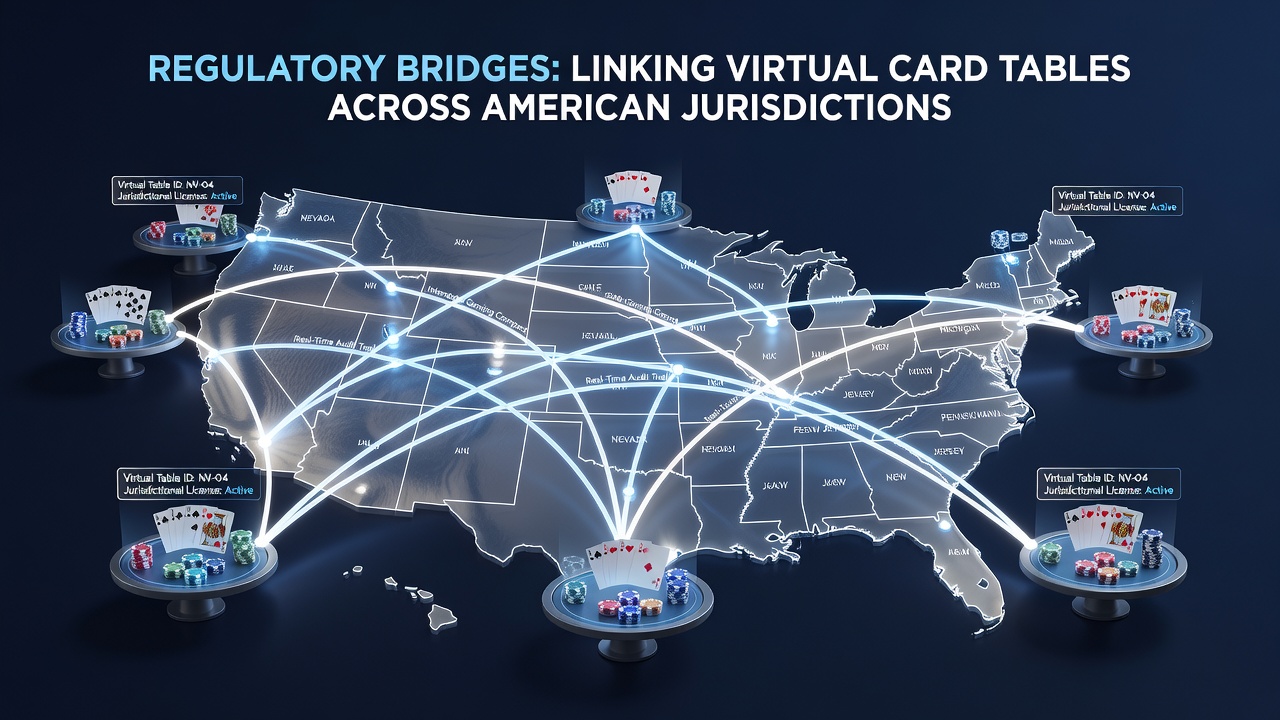
Technical requirements for these bridges include encrypted transaction logs that each state regulator can access independently, and this setup allows real-time monitoring without centralizing all oversight in a single agency. Industry associations representing gaming operators have published guidelines that assist states in drafting compatible rules, and these documents emphasize compatibility with existing land-based casino regulations where applicable.
Impact on Operators and Players
Operators licensed in multiple states report that linked tables improve table availability during off-peak hours, since players from different time zones can join the same games. State regulatory filings show that average session lengths in pooled environments have increased modestly compared with single-state platforms, though individual state data continues to track player behavior separately for compliance purposes. Those who have analyzed transaction records note that deposit and withdrawal processes remain handled at the state level even when gameplay crosses boundaries.
Player accounts stay tied to their home state's licensing requirements, and this separation ensures that responsible gaming limits and self-exclusion lists operate according to local statutes. Compact administrators hold periodic meetings to review cross-border issues, and meeting minutes indicate that discussions often center on standardizing reporting formats rather than altering core game rules.
Challenges and Ongoing Adjustments
States entering negotiations must reconcile differences in tax rates and licensing fees, and these discussions can extend timelines for new participants. Regulatory bodies in states considering compacts have conducted public hearings where stakeholders present data on expected economic effects, and summaries of those hearings reveal consistent interest in expanding player pools while protecting local tax revenues. Technical audits performed by independent firms verify that geo-location systems prevent unauthorized access from non-compact states, and results from these audits appear in annual compliance reports submitted to each participating legislature.
Additional jurisdictions continue to evaluate the model, with some exploring limited test periods before full integration. Data compiled by multi-state working groups shows that dispute resolution procedures have been invoked infrequently, suggesting that initial technical setups have handled most operational questions without escalation.
Conclusion
Interstate regulatory bridges for virtual card tables continue to evolve through measured expansions of existing compacts, and available figures indicate sustained growth in pooled player activity across participating American states. State regulators maintain separate oversight while enabling shared gameplay, creating a framework that balances local control with broader market access. As more jurisdictions review participation options through 2026, the structure established by early adopters provides a template for further connections without requiring uniform national rules.