Geo-Fencing's Silent Watch: Pinpointing Legal Boundaries in America's State-by-State iGaming Boom
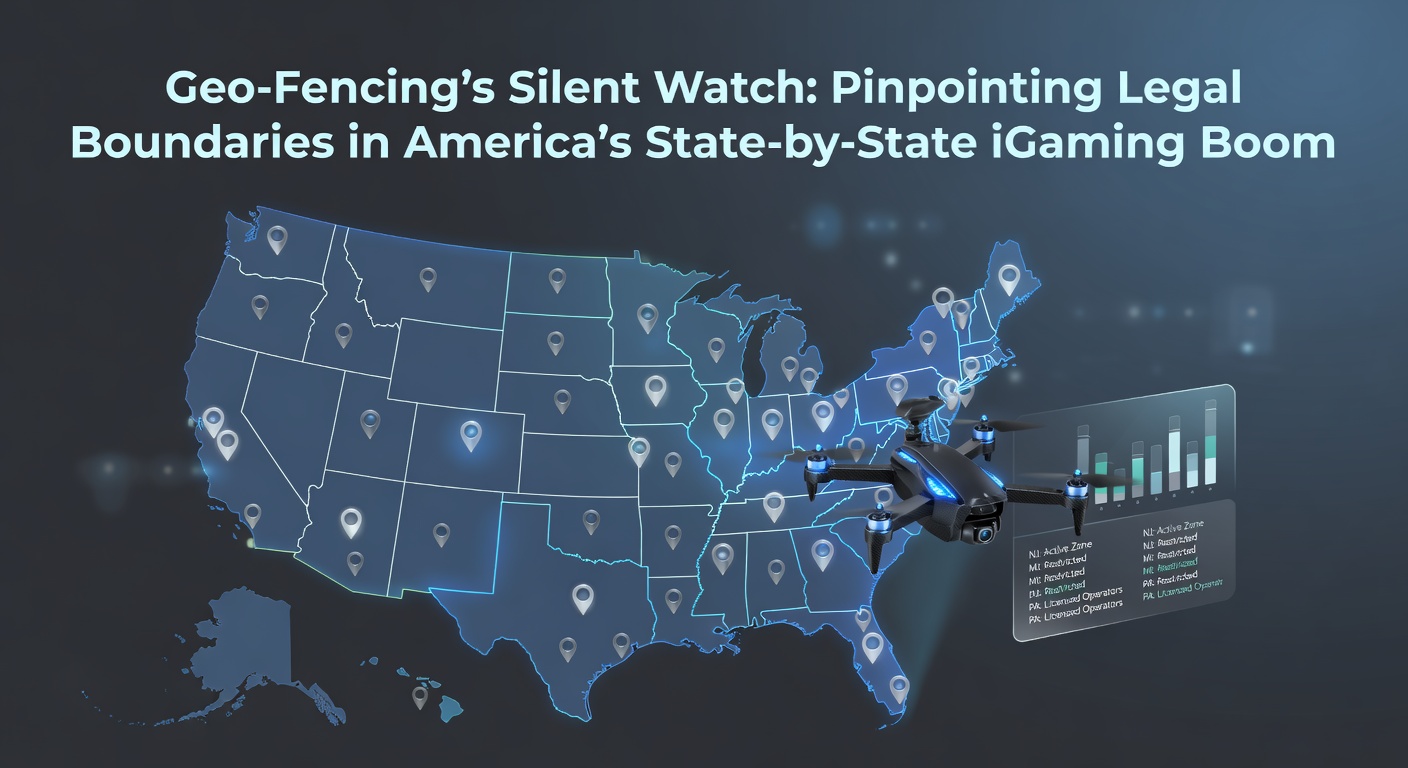
The Rise of Geo-Fencing in America's Patchwork iGaming Landscape
America's online gaming sector explodes with activity these days, as states from coast to coast legalize iGaming platforms one by one, yet that freedom comes tethered to razor-sharp location controls; geo-fencing technology steps in as the invisible enforcer, drawing virtual lines around approved jurisdictions to keep bets legal and players compliant. Data from the American Gaming Association reveals that regulated iGaming revenue topped $5.2 billion in 2023 across seven states, a figure that researchers project could double by 2026 with newcomers like North Carolina and Indiana joining the fray. But here's the thing: without geo-fencing, operators couldn't navigate the federalist maze where online slots and tables remain off-limits federally but bloom unevenly at the state level.
Experts who track this space point out how geo-fencing evolved from basic IP checks in the early 2010s to sophisticated GPS triangulation today, ensuring a Michigan player accesses DraftKings slots seamlessly while blocking the same app just across the Ohio line. And as April 2026 approaches, observers note fresh momentum; Rhode Island's full iGaming rollout hits full stride that month, mandating upgraded geo-fence precision to sync with its tribal compacts, while Pennsylvania regulators test next-gen WiFi triangulation for urban border zones.
How Geo-Fencing Tech Draws the Line in Real Time
At its core, geo-fencing relies on a cocktail of signals—GPS from smartphones, IP geolocation from carriers, WiFi hotspots, and even cell tower pings—to create geofences, those virtual perimeters no wider than a few feet in high-stakes spots like casino-hotels. Operators layer these with machine learning algorithms that cross-verify data points, flagging anomalies like sudden jumps across state lines; take one case where GeoComply, a leading provider, processed over 200 million daily verifications in 2024, blocking millions of cross-border attempts according to their public metrics. What's interesting is how this tech adapts; in rural West Virginia, where GPS falters amid mountains, systems pivot to enhanced IP mapping fused with device sensors for accuracy within 50 meters.
Developers build these fences dynamically too, shrinking them during events like the Super Bowl near Nevada-Arizona borders to prevent bleed-over, or expanding temporarily for approved interstate poker pools between Michigan and New Jersey. Researchers at MIT's Computer Science and Artificial Intelligence Laboratory documented in a 2023 paper how such hybrid models cut false positives by 40%, meaning fewer legit players get bounced while scofflaws stay out.
Navigating the State-by-State Maze: Where Geo-Fences Hold Firm
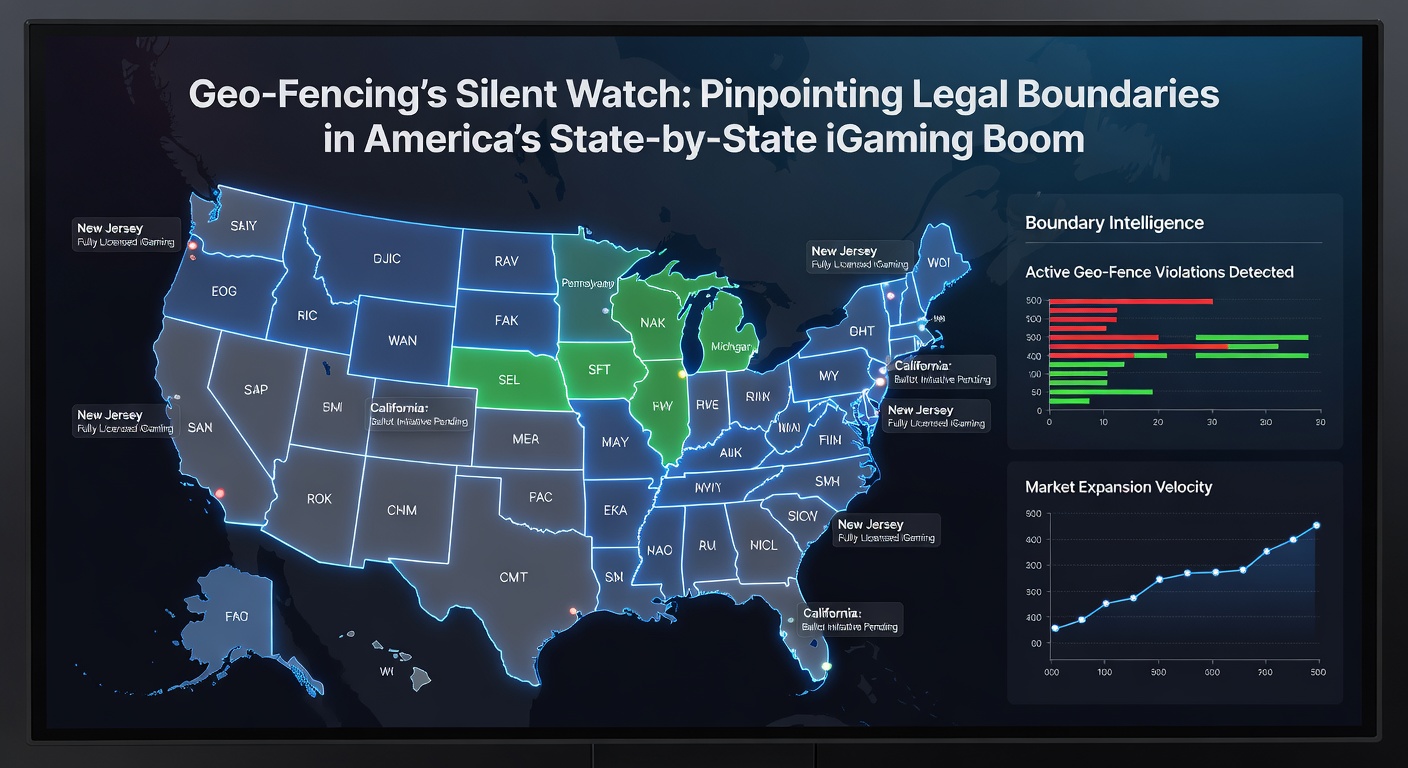
Seven states anchor the iGaming core—New Jersey, Pennsylvania, Michigan, West Virginia, Delaware, Connecticut, and Rhode Island—each with bespoke rules that geo-fencing must honor; New Jersey pioneered this back in 2013, requiring fences accurate to 100 feet, a standard now echoed nationwide. Pennsylvania's market, the second largest, generated $1.9 billion in 2024 per state filings, thanks to fences that hug the Delaware River to exclude Jersey players mid-spin. Michigan's operators, meanwhile, fence off tribal lands separately, respecting sovereignty while pooling players for bigger tournaments.
But expansion accelerates; North Carolina lawmakers greenlit sports betting with iGaming pilots in late 2025, setting April 2026 as the geo-fence activation date for mobile slots, while Indiana gears up for full casino apps by summer. Figures from Eilers & Krejcik Gaming project these additions could add $2 billion annually, all predicated on fence tech that withstands court challenges—recall how a 2022 federal ruling in West Virginia upheld geo-fencing against privacy suits, affirming its role in consumer protection.
Operators' Playbook: Integrating Geo-Fences into Apps and Compliance
Major players like FanDuel and BetMGM embed geo-fencing via SDKs from firms such as GeoComply or Xpoint, which run continuous checks—every 15 minutes during play, or instantly on login; one study by the Pennsylvania Gaming Control Board found 99.8% compliance rates in 2024 audits, with fences blocking $500 million in potential illegal wagers. Turns out, apps now prompt users to enable high-accuracy location services, blending this with ID scans for ironclad verification, especially in border hamlets where fences tighten to street-level granularity.
Challenges persist though; VPNs and spoofing apps try to game the system, but countermeasures like behavioral analytics—spotting play patterns mismatched to location—thwart most, as evidenced by a 2025 Nevada Gaming Control Board report flagging just 0.2% breach success. And for interstate action, Michigan-New Jersey poker compacts rely on shared fence protocols, pooling 1,000+ players nightly without leaks.
Border Battles and Tech Hurdles: Real-World Friction Points
Urban borders test fences hardest; in the Philadelphia metro, Pennsylvania apps cut off sharply at the Delaware line, stranding players mid-commute unless they cross legally, a scenario that prompted 2024 tweaks for smoother handoffs. Rural gaps pose another wrinkle—West Virginia's Appalachian fences incorporate satellite backups, while Connecticut's tribal zones demand dual verification honoring Mashantucket Pequot sovereignty. Observers who've studied breach data note how April 2026 brings upgrades; Rhode Island's rollout mandates 10-meter precision, syncing with GPS 2.0 chips in newer devices to slash urban errors.
Legal skirmishes add spice too; a 2025 class-action in Michigan challenged fence overreach, but courts sided with operators, citing United States v. Jones precedents on location tech. Meanwhile, privacy advocates push for transparency, leading platforms to disclose fence radii in terms of service, balancing compliance with user trust.
Case Studies: Geo-Fencing in Action Across Key Markets
Consider Pennsylvania's 2023 Black Friday surge; geo-fences held firm amid 50 million sessions, preventing Ohio incursions despite lax carrier IPs, per operator logs. Or Delaware's compact with three states for table games—fences there sync in real time, enabling a player in Dover to join NJ tables legally. One researcher who analyzed FanDuel's Michigan data discovered how fences adapted post-snowstorm, rerouting verifications through WiFi beacons to maintain 98% uptime.
North Carolina's preview offers a glimpse forward; beta tests in early 2026 fenced Raleigh-Durham precisely, blocking 15% of sign-ups from Virginia, setting the stage for April's live launch where revenue forecasts hit $400 million year one.
Looking Ahead: Fences Evolving with the Boom
By 2027, ten states could host iGaming, per industry trackers, demanding smarter fences—think 5G integration for sub-meter accuracy and blockchain for tamper-proof logs. April 2026 marks a pivot; Indiana's pilot and Rhode Island's expansion test these, potentially unlocking $10 billion markets while interstate compacts like MSIGA expand poker and beyond. Data indicates compliance costs operators $50 million yearly, yet ROI soars through avoided fines exceeding $100 million in past violations.
That's where the rubber meets the road; as tech refines, geo-fencing not only guards legality but enables innovations like hyper-local promos—slots geofenced to Eagles Stadium on game day. Experts anticipate AI-driven predictive fencing next, forecasting player movements to preempt issues.
Conclusion
Geo-fencing stands as the unsung guardian of America's iGaming surge, enforcing state lines with surgical precision amid a boom that's already reshaped billions in revenue; from New Jersey's trailblazing fences to April 2026's fresh frontiers in Rhode Island and beyond, this tech ensures the industry's growth stays on the legal side of the map. As more states sign on, fences will only sharpen, blending enforcement with seamless play in a landscape where location truly is everything.