Poker Pooling Prowess: Shared Player Pools Reshaping US Interstate Online Card Rooms

The Rise of Interstate Poker Liquidity
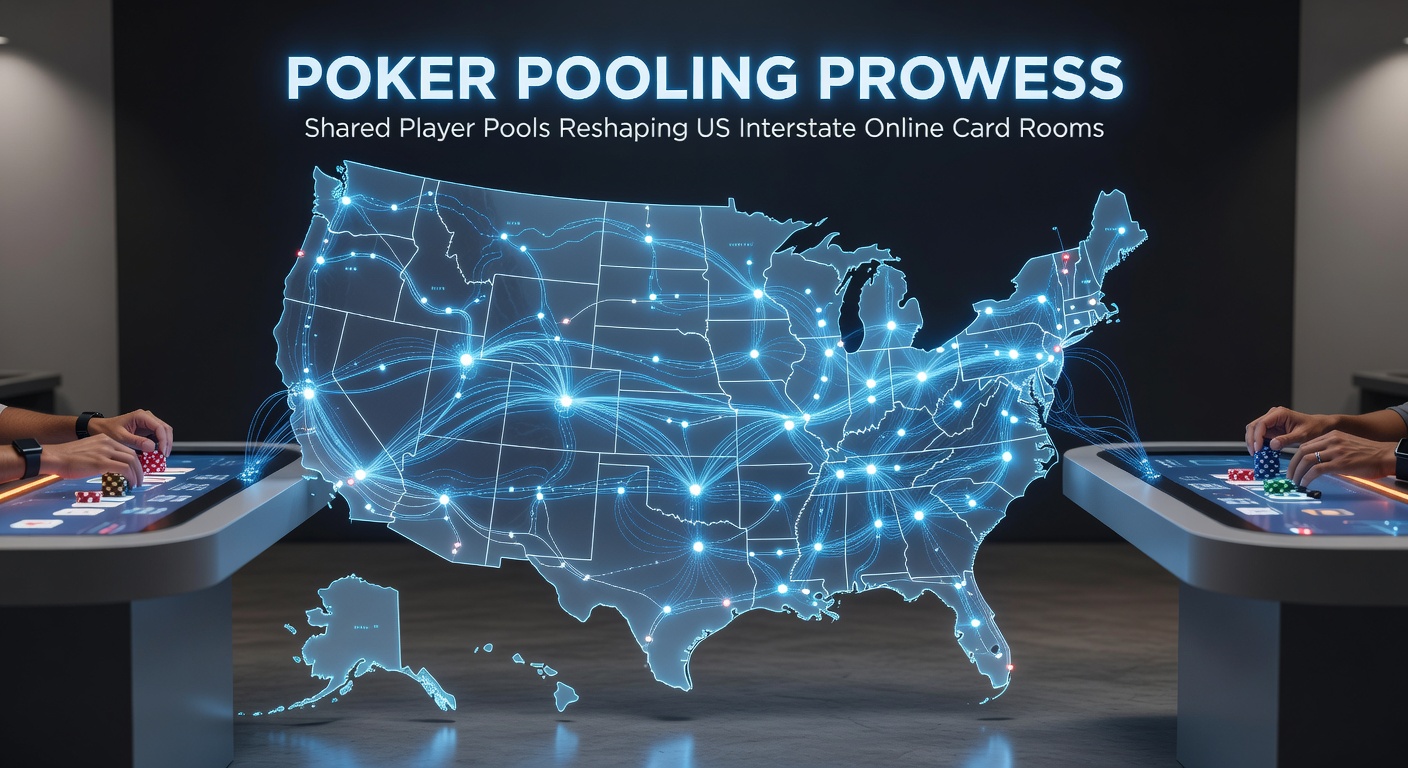
Shared player pools have transformed online poker in the United States, connecting isolated state markets into vibrant, bustling card rooms where action never sleeps; operators like WSOP.com and PokerStars now draw from combined liquidity across multiple jurisdictions, boosting tournament guarantees and cash game traffic in ways that fragmented pools never could. Data from the New Jersey Division of Gaming Enforcement reveals that since Michigan joined the Multi-State Internet Gaming Agreement (MSIGA) in early 2021, average daily hands played surged by over 40% in participating states, while peak-hour player counts climbed steadily through 2025.
But here's the thing: this isn't just about bigger numbers; it's reshaping how players engage, with smaller states like Delaware benefiting from New Jersey's massive volume, creating a symbiotic network that keeps tables full even during off-peak hours. Observers note that without these pooled resources, many regional sites would struggle to maintain liquidity, leading to ghost tables and frustrated grinders who chase action across apps.
Tracing the Roots: From Isolation to Interstate Compacts
Online poker legalization kicked off unevenly across the US after the 2011 UIGEA restrictions eased federal pressure, allowing states to craft their own rules; Nevada led with intrastate play in 2013, but true scale emerged when New Jersey, Delaware, and Nevada forged the MSIGA pact in 2018, enabling cross-border tournaments and ring games under strict data-sharing protocols. Michigan's entry expanded the pool to four core states by 2021, and Pennsylvania observers keep a close eye, though full integration remains elusive due to legislative hurdles.
Take Delaware, for instance, where pre-pooling player bases hovered around 500 concurrent users; post-MSIGA, that figure tripled almost overnight, according to state gaming reports, because Jersey players flooded in seeking softer competition, while locals tapped into massive WSOP bracelets events. And yet, challenges persist: operators must navigate varying tax rates—New Jersey at 17.5% versus Michigan's 8% on revenue—which complicates revenue sharing, although tech solutions like geo-fencing and blockchain verification have smoothed compliance.
Key Milestones in the Timeline
- 2013: Nevada launches first regulated online poker site.
- 2018: MSIGA formalizes shared liquidity between NV, NJ, DE.
- 2021: Michigan integrates, pool size doubles.
- 2025: Record $150 million in interstate tournament prize pools.
Mechanics of Shared Pools: Tech and Regulation in Sync
At the core, shared player pools rely on sophisticated backend tech that verifies player locations in real-time using GPS, IP geolocation, and device fingerprinting, ensuring only eligible residents join; this setup, overseen by MSIGA's central server in Atlantic City, aggregates traffic while segregating funds per state law, so a Michigan player can't cash out Jersey winnings without proper transfer protocols. Figures from the American Gaming Association indicate that these systems cut fraud incidents by 65% since implementation, thanks to unified anti-money laundering checks.
What's interesting is how operators adapt: WSOP.com, for example, runs "Interstate" tabs where players see combined lobbies, spiking multi-table tournament entries; one study from the University of Nevada's gaming research center found that pooled events average 25% higher buy-ins because the larger fields justify bigger overlays, drawing pros from coast to coast. That said, not everything's seamless—West Virginia dipped a toe in 2023 discussions but pulled back over data privacy concerns, highlighting the political tightrope states walk.
And now, as March 2026 approaches, whispers of Connecticut's potential entry circulate; state lawmakers there, buoyed by tribal casino revenues, eye MSIGA affiliation to counter Foxwoods and Mohegan Sun's brick-and-mortar dominance, with preliminary bills slated for vote by quarter's end, per local gaming commission filings.
Impact on Players and Operators: Data-Driven Wins
Players win big from this reshuffle: softer games emerge as recreational traffic from smaller states mixes with sharks from Jersey, leading to higher win rates for skilled grinders; research from PokerScout analytics shows average hourly rake adjusted for pool size dropped 15% post-Michigan join, because more hands mean efficient table fills without artificial boosting. Operators, meanwhile, report revenue jumps—New Jersey sites alone pulled $120 million in poker gross gaming revenue for 2025, up 22% year-over-year, much attributed to interstate volume.
Consider this case: a Delaware regular who once grinded 20bb/100 sessions locally now hits 40bb/100 in pooled No-Limit Hold'em, as per tracked hand histories shared in industry forums; that's where the rubber meets the road for part-timers chasing sustainable edges. But operators face heat too: Pennsylvania's standalone market, with over 300 daily peak players on PokerStars PA, eyes the MSIGA enviously, yet Governor Shapiro's administration stalls on compacts, citing sovereignty issues that echo Nevada's early hesitations.
Comparative Liquidity Snapshot (2025 Averages)
- MSIGA Pool: 2,500+ concurrent players.
- Pennsylvania Standalone: 1,200 players.
- Isolated Markets (e.g., WV): Under 300.
It's noteworthy that mobile adoption accelerates this trend; 70% of interstate hands now hit via apps, per operator disclosures, blending seamless deposits with always-on action that keeps casuals hooked longer than desktop-only eras.
Challenges and Hurdles: The Roadblocks Ahead
Regulatory fragmentation bites hard: while MSIGA unifies four states, others like Pennsylvania and Michigan flirt with bilateral deals but balk at federal oversight fears; the Unlawful Internet Gambling Enforcement Act still looms, requiring operators to prove segregated wallets, which adds compliance costs averaging $5 million annually per platform, according to Gaming Labs International audits. And privacy? That's a hot potato—EU-style GDPR influences from across the pond push for opt-in tracking, clashing with US norms, although Michigan's Gaming Control Board led 2025 reforms mandating transparent data flows.
Yet progress churns: Pennsylvania's legislature debates MSIGA entry for 2027, potentially unlocking 40 million in added revenue, while smaller players like Iowa explore observer status. Turns out, economic pressures—fading post-COVID tourism—nudge holdouts toward pooling, as standalone rooms bleed users to interstate giants.
Future Horizons: Expansion and Innovation by 2026
Looking ahead, March 2026 marks a pivot: Connecticut's tribal negotiators signal readiness for MSIGA trials, aiming to pipe Foxwoods loyalty programs into online pools, which could swell liquidity by 20%, based on population projections from state economic reports. Meanwhile, tech leaps like VR poker tables test interstate waters, with prototypes from Nevada startups promising immersive cross-state play under pilot licenses.
Experts who've tracked this space predict five-state pools by 2028 if Pennsylvania flips, citing precedents like sports betting's rapid PASPA repeal spread; one analyst from the University of Nevada noted that shared crypto wallets, compliant with FinCEN rules, could slash transfer fees by half, greasing expansion wheels. So, while hurdles remain, the momentum builds relentlessly, turning US poker from patchwork to powerhouse.
People often overlook how this fosters innovation too: AI-driven seat-matching algorithms now predict table dynamics across states, reducing wait times to under 30 seconds; that's a game-changer for mobile-first millennials dominating 60% of new sign-ups.
Conclusion
Shared player pools stand as the defining force in US online poker's evolution, knitting state silos into a national tapestry of non-stop action and escalating stakes; from MSIGA's foundational wins to March 2026's expansion teases, data underscores the uplift in player engagement, operator viability, and overall market health. As more states weigh the scales—balancing sovereignty against liquidity's allure—the card rooms keep growing, one interstate hand at a time, proving that in poker as in policy, pooling prowess pays dividends.