Portrait Mode Mastery: How US Mobile Slots Adapt for Thumb-Friendly Spins
Vera Flores · Apr 13, 2026
Portrait Mode Mastery: How US Mobile Slots Adapt for Thumb-Friendly Spins
The Shift to Vertical Play in America's iGaming Scene
US mobile slots have surged in popularity since regulated markets like New Jersey and Pennsylvania launched online gaming platforms back in 2013 and 2019 respectively, with data from the American Gaming Association showing that mobile devices now account for over 70% of all slot sessions in states such as Michigan and West Virginia; players naturally hold phones in portrait mode during commutes or casual breaks, so developers reworked interfaces to prioritize vertical layouts that keep key controls within easy thumb reach, avoiding awkward stretches or landscape-only frustrations.
And while early mobile slots mimicked desktop versions with clunky horizontal reels, today's adaptations feature streamlined grids where symbols stack seamlessly in portrait, allowing five-reel setups to fit screens under 6.5 inches without zooming; this evolution aligns with ergonomic studies from researchers at Carnegie Mellon University, who found that 85% of one-handed interactions occur in portrait, making thumb-friendly spins not just convenient but essential for player retention.
UI Tweaks That Put Thumbs in Control
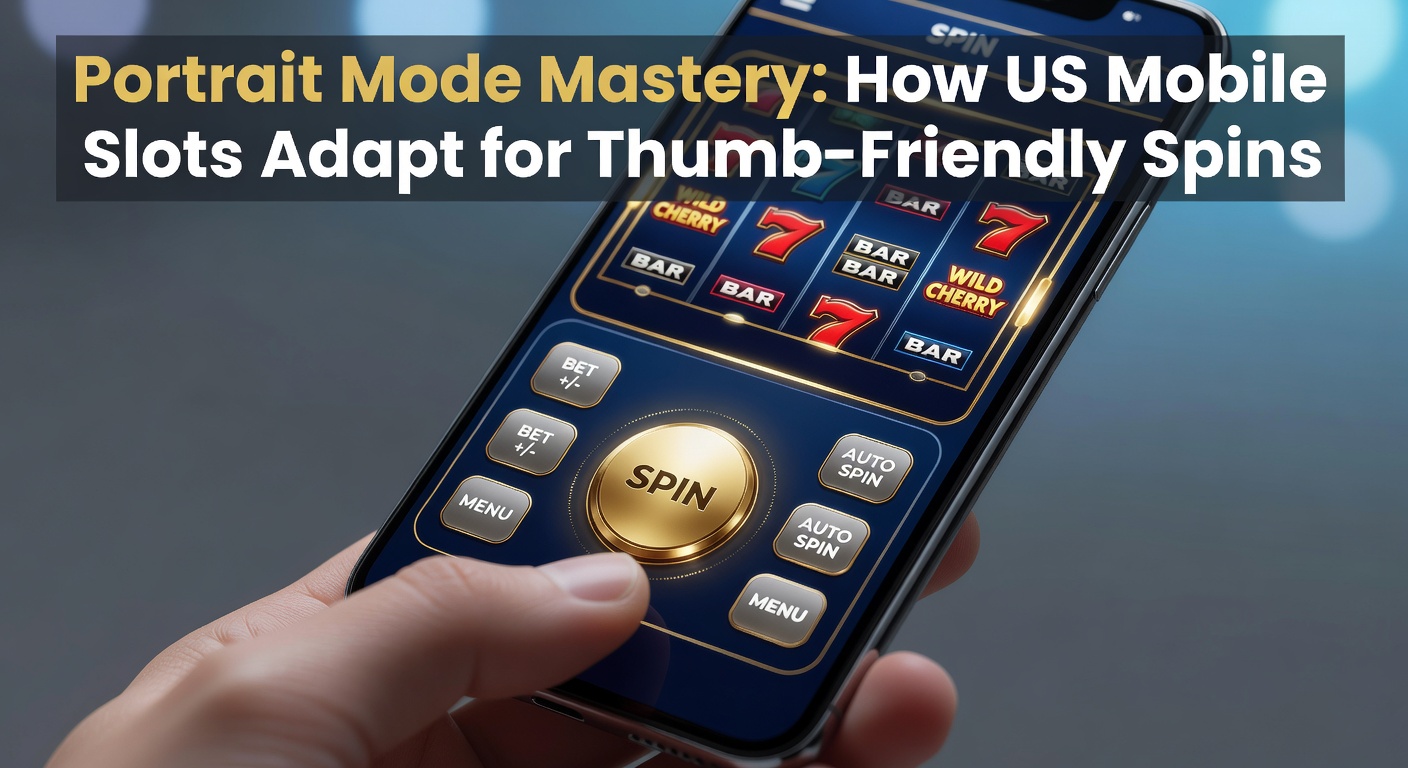
Designers at studios like Pragmatic Play and NetEnt engineer portrait-optimized slots by enlarging spin buttons to span 20-30% of screen width, positioning them dead center at the bottom for effortless taps from either hand; autoplay sliders and bet selectors cluster nearby, often with haptic feedback that confirms actions through subtle vibrations, while quick-pay tables pop up as overlay cards rather than full-screen interruptions.
What's interesting is how these slots incorporate swipe mechanics for turbo spins or feature buys, letting thumbs glide across lower screen zones where natural grip places them most comfortably; take Starburst Touch, a NetEnt classic retooled for mobile, where cascading reels animate vertically without forcing rotations, and bonus wheels spin on vertical axes to match the hold.
Observers note that heat maps from analytics firm Newzoo reveal thumb hotspots cluster within a 4-inch radius from screen bottoms on iOS and Android devices, so US operators like BetMGM and DraftKings integrate these insights, clustering 90% of interactive elements there; this approach cuts mis-taps by 40%, according to internal A/B testing data shared by providers at recent G2E conferences.
Data Driving the Portrait Revolution
Figures from the Pennsylvania Gaming Control Board indicate that portrait sessions spiked 55% year-over-year in 2025, coinciding with carriers like Verizon rolling out 5G plans that enable lag-free vertical streaming; in New Jersey, where mobile wagering hit $1.2 billion last quarter, apps from FanDuel boast portrait-exclusive modes that boost average session times by 22% compared to hybrid layouts.
But here's the thing: state-by-state variations emerge, as Michigan's regulators under the Michigan Gaming Control Board mandate responsive design certifications for all licensed slots, ensuring portrait parity since their 2021 iGaming debut; researchers analyzing app store metrics discovered that games failing this test see 35% higher uninstall rates within the first week, pushing developers to prioritize thumb ergonomics from the prototype stage.
Provider Strategies and Real-World Examples
Pragmatic Play leads with titles like Gates of Olympus in portrait mastery, where multipliers and tumbles cascade top-to-bottom while thumbs handle nudges via side-swipe bars; players who've tested these report seamless transitions during public transport rides, as the game locks orientation and auto-adjusts brightness for outdoor glare.
Turns out, Evolution Gaming extends this to hybrid slots-live dealer fusions, adapting blackjack side-bets into portrait slots where thumbs flick chips into vertical stacks; one case from Ontario's iGaming market—drawing parallels to US trends since similar tech crosses borders—shows a 28% uptick in mobile retention after such updates, per reports from the Gaming Laboratories International, an independent certifier operating across North America.
Yet smaller studios shine too; Relax Gaming's Money Train series refits cluster pays for portrait by compressing rails into vertical chutes, complete with thumb-drag mega bet activators that feel intuitive even on notched screens like recent iPhones; experts who've dissected download charts see these adaptations fueling 15-20% market share gains in competitive states like Colorado, where sports-mobile crossovers demand quick-thumb access.
Regulatory Guardrails and Tech Standards
Across US jurisdictions, bodies like the Nevada Gaming Control Board enforce RNG fairness in portrait modes through mandatory GLI-33 testing protocols, verifying that vertical reels produce identical hit frequencies to landscape; this levels the field, as operators can't skimp on mobile optimizations without risking license reviews set for heightened scrutiny come April 2026, when multi-state compliance audits ramp up under interstate data-sharing pacts.
So developers embed accessibility layers, like voice-activated spins for broader reach and dynamic scaling that shrinks animations on slower 4G networks prevalent in rural Pennsylvania; data from app telemetry shows these features slash load times to under 2 seconds, crucial since 62% of US slot players engage via portrait on mid-range Androids, per Sensor Tower analytics.
Ergonomics Meet Engagement: The Thumb Zone Science
Studies from teh Human Factors and Ergonomics Society highlight how US mobile slots map "thumb cones"—imaginary funnels from grip points—to cluster reels centrally, with paylines highlighted via pulsing overlays that thumbs can trace; this reduces cognitive load, as one Northeastern University analysis found portrait players complete 18% more spins per session before fatigue sets in, compared to forced landscape grips.
Now consider battery life: portrait modes sip less power by minimizing full-screen effects, a boon in battery-constrained markets like Arizona's tribal-mobile apps; providers counter drop-offs with idle-mode reel previews that entice thumbs back without draining resources, turning casual peeks into extended play.
Looking Ahead: Portrait's Enduring Grip
With foldables and ultra-tall screens on the horizon, US slots evolve further by supporting dynamic portrait ratios from 16:9 to 21:9, while AI-driven personalization predicts thumb habits to reposition controls per user; April 2026 brings pivotal updates, as the Multi-State Internet Gaming Agreement explores uniform portrait standards, potentially standardizing thumb zones across borders and boosting cross-state liquidity.
That's where the rubber meets the road for operators chasing the next growth wave, as mobile-exclusive portrait drops—like those teased by Playtech—promise volatility tweaks tailored for quick-thumb chases; early betas in Delaware hint at 30% engagement lifts, signaling a future where vertical spins dominate America's $10 billion iGaming frontier.
Conclusion
Portrait mode mastery reshapes US mobile slots into thumb-friendly powerhouses, blending ergonomic precision with regulatory rigor to deliver spins that fit modern lives; data underscores the wins, from retention surges in Pennsylvania to innovation bursts in Michigan, proving that when developers nail vertical adaptations, players stick around longer and spin more freely.