Tracing Skill Integration Patterns Across Licensed US Slot Systems
Willa Roth · Aug 3, 2026
Tracing Skill Integration Patterns Across Licensed US Slot Systems
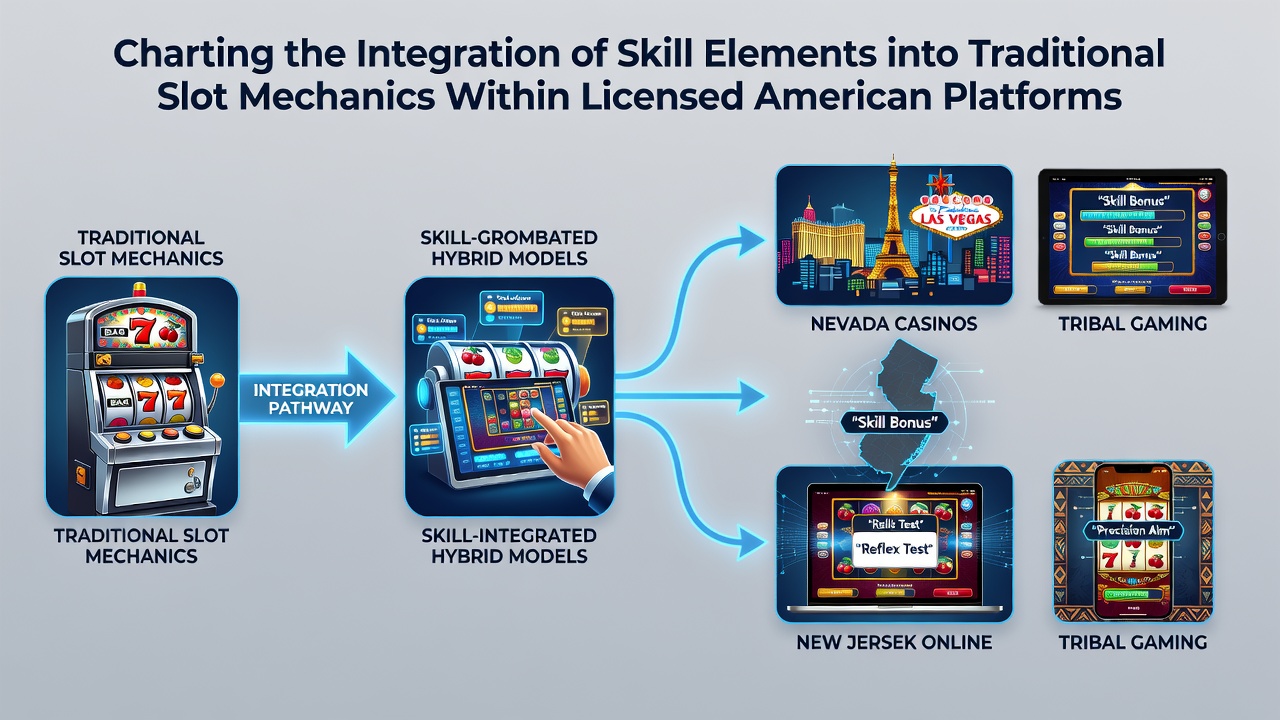
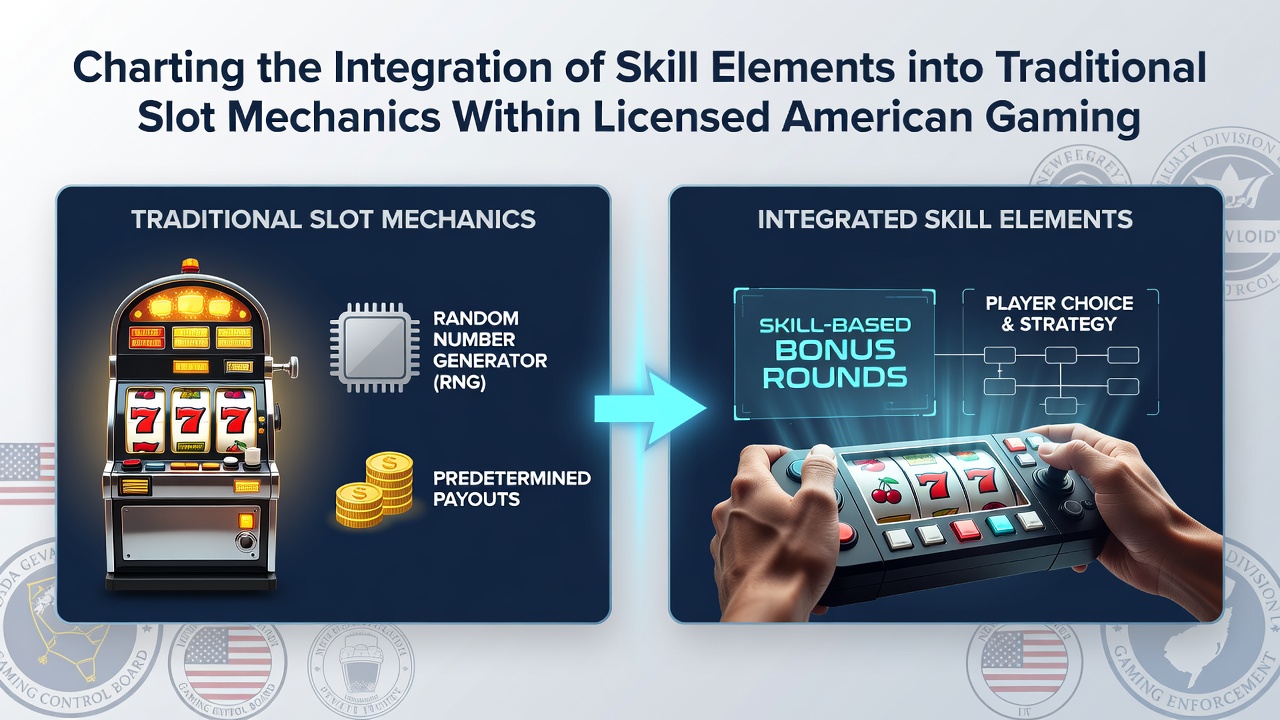
Regulated platforms in states such as New Jersey, Pennsylvania, and Michigan have begun embedding skill-based components into established slot frameworks, and data from the New Jersey Division of Gaming Enforcement indicates that these hybrids accounted for 14 percent of new game approvals during the first half of 2026. Developers achieve compliance by retaining a random number generator for core reel outcomes while layering optional mini-games where player decisions influence secondary rewards, and this structure allows operators to market interactive features without altering the fundamental randomness required by state statutes.
Technical Approaches to Hybrid Design
Engineering teams separate the RNG backbone from skill modules through modular code architecture, and when a player triggers a bonus round the system presents a choice-based challenge such as timing-based targeting or pattern matching that adjusts only the multiplier applied to an already-determined base prize. Observers note that this separation satisfies testing laboratories because the primary win probabilities remain fixed regardless of skill performance, whereas the skill layer merely redistributes a predefined prize pool among participants who engage with the interactive element.
State-by-State Implementation Differences
Michigan regulators approved the first wave of these hybrids in late 2024, and by August 2026 more than 60 titles featuring skill overlays operated on licensed sites within the state, while Pennsylvania has required additional documentation proving that skill elements do not exceed 25 percent of total expected value in any single game. New Jersey maintains a different threshold that caps skill contribution at 30 percent, and these variations have prompted developers to create configurable versions of the same title that adjust skill weighting according to each jurisdiction's ruleset.
Market analytics firms tracking player retention report that sessions incorporating skill modules extend average playtime by 18 percent compared with pure RNG equivalents, and operators attribute the increase to repeat engagement with the interactive segments rather than changes in overall payout frequency. Those who have examined session logs across multiple platforms observe that players often return specifically to refine their approach to particular mini-games, creating measurable loyalty patterns that traditional slots alone have not produced at the same scale.
Player Behavior and Platform Data
Surveys conducted by the University of Nevada, Las Vegas gaming research center reveal that 62 percent of participants in skill-hybrid games describe the experience as more engaging than standard reels, yet teh same respondents report no significant difference in perceived fairness when the underlying RNG mechanics are explained. Platforms present these explanations through in-game help screens and responsible gaming pop-ups, and regulators in multiple states now mandate that such disclosures appear before the first skill round activates.
Integration timelines accelerated after the American Gaming Association published a 2025 white paper outlining technical standards for hybrid verification, and several major suppliers aligned their certification pipelines with those guidelines by the second quarter of 2026. The result has been faster approval cycles in states that reference the association's framework, although each jurisdiction still conducts its own independent lab testing before green-lighting commercial release.
Future Development Pathways
Industry roadmaps presented at the 2026 Global Gaming Expo outlined plans to expand skill layers into progressive jackpot structures, and early prototypes demonstrate that player performance in the skill module can unlock additional jackpot entries without altering the base RNG odds. Regulators in Delaware and West Virginia have signaled openness to pilot programs for such mechanics, provided independent audits confirm that the skill component never influences the probability of hitting the progressive trigger itself.
Cross-border comparisons with Canadian provincial systems show similar patterns emerging in Ontario, where skill-infused slots received approval in 2025 under the Alcohol and Gaming Commission of Ontario oversight, and data indicates comparable retention lifts without corresponding increases in problem gambling flags. Australian researchers tracking parallel trials have noted that clear regulatory boundaries on skill weighting help maintain player trust across different markets, and US platforms appear to be adopting comparable transparency measures ahead of further expansion.
Conclusion
By August 2026 the integration of skill elements into traditional slot mechanics has moved from experimental releases to established product lines across multiple licensed American platforms, and teh pattern reflects coordinated adjustments among developers, operators, and state regulators to preserve RNG integrity while introducing interactive features. Continued monitoring through established testing protocols and academic studies will determine the long-term trajectory of these hybrids within the broader US igaming landscape.